
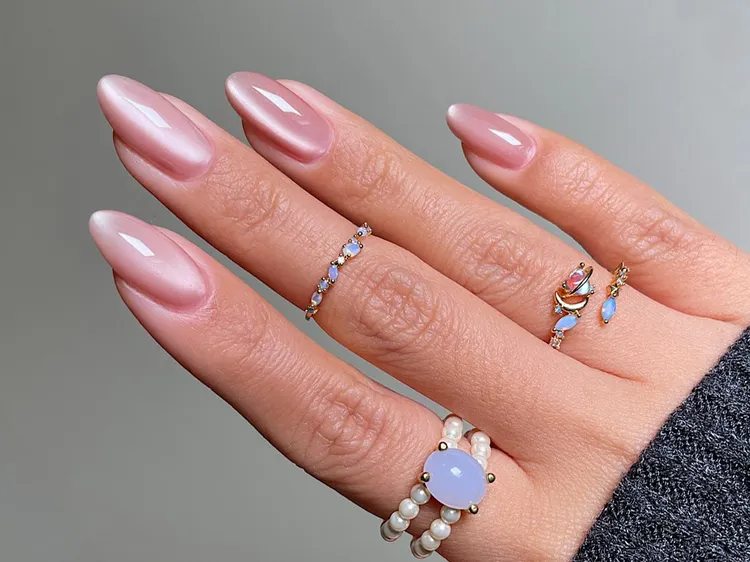
As beauty trends continue to shift to healthier, low-maintenance routines, nail care has followed suit. From embracing naked nails and prioritizing nail recovery between manicures to seeking out gentler salon techniques, healthy nails have become just as important as a polished finish. Naturally, manicure enthusiasts are constantly on the lookout for methods that deliver long-lasting results without compromising nail health. Think Russian manicures for their meticulous cuticle work, polygel for durable wear with less damage, and now, Japanese gel.
While the application is similar to a traditional gel manicure, Japanese gel takes a more nail-conscious approach. The result is long-lasting, glossy color that’s easier to remove (arguably the most dreadful part) and designed to be gentler on the natural nail.
“To us, Japanese gel nails aren’t defined by where a product is made—it’s defined by a system of craftsmanship,” says Sandra Wei, founder of Peach Bling Nails. “That means gentle techniques, structural precision, bespoke designs, and respect for the natural nail. Beautiful nails are the result of doing every step with care.”
What Are Japanese Gel Nails?
At its core, Japanese gel is less about where the gel is made and more about a philosophy of nail care. Rather than focusing solely on long-lasting color, the technique emphasizes careful application, structural support, and maintaining the integrity of the natural nail. “Japanese gels are soft gels that range from color to structured builder gel,” explains celebrity nail artist Sonya Meesh.
According to Wei, the category also encompasses structured hard gels, which are used to add strength and durability on the natural nail without relying on extensions. Many salons that specialize in Japanese gel also opt for professional formulas that are free of ingredients like TPO and HEMA, creating a gentler experience for both clients and nail technicians.
In short, Japanese gel combines high-performance products with meticulous techniques to create long-lasting manicures that support healthier-looking natural nails over time.
Japanese Gel vs. Traditional Gel
While Japanese gel and traditional gel manicures share many similarities, the biggest differences come down to the formulas, intentional application, and overall aesthetic.
Formula & Aesthetics
“A lot of Japanese gels come in pots, and those that don’t are of a thinner viscosity,” says Meesh. “Japanese color gels are stronger in pigment payoff because of their potted nature—Kokoist is a great example of this!” According to Wei, Japanese gel is also known for its understated design aesthetic. “Rather than bold, opaque, or fluorescent colors, Japanese gel collections often feature sheer shades and soft neutral tones that enhance the natural beauty of the nail,” she says. “The nail art follows the same philosophy. Blended gradients, watercolor effects, layered textures, subtle shimmer, and delicate hand-painted details are much more common than highly saturated designs. The overall look is soft, refined, and effortlessly elegant.”
A More Customized Application
To Wei, the biggest difference isn’t just the gel—it’s how it’s applied. Japanese gel manicures begin with a precise yet gentle cuticle prep, followed by a base gel selected for your nail type rather than a one-size-fits-all formula. The goal is a manicure that’s tailored to your nails from the very first step.
Built for Structure, Not Bulk
Unlike traditional gel, Japanese gel focuses on building strength without adding bulk. Rather than applying flat layers of gel, nail artists create a carefully balanced apex—a subtle arch that helps reinforce the natural nail and distribute pressure more evenly. The result is a manicure that feels lightweight while remaining durable.
“Every client’s nails are different, so we choose the base gel based on their nail type (soft, dry, or oily) rather than using the same product for everyone,” Wei says. “Instead of adding unnecessary thickness like acrylic or UV gel, we build strength strategically so the nail edges remain slim, refined, and durable. Strong nails don’t have to look bulky.”
Removal & Aftercare
Caring for a Japanese gel manicure is much like caring for a traditional gel set. “Aftercare and removal are the same and doesn’t involve much filing to the natural nail,” says Meesh. Because most Japanese gels are soft gels, they’re typically removed by soaking rather than excessive filing.
To keep your manicure looking its best, Wei recommends applying cuticle oil daily, avoiding harsh cleaning chemicals when possible, and keeping up with regular salon maintenance. “Professional removal helps preserve nail health and provides a better foundation for the next service,” she says.
Our Favorite Japanese Gel Looks
01of 05
Blueberry Spritz
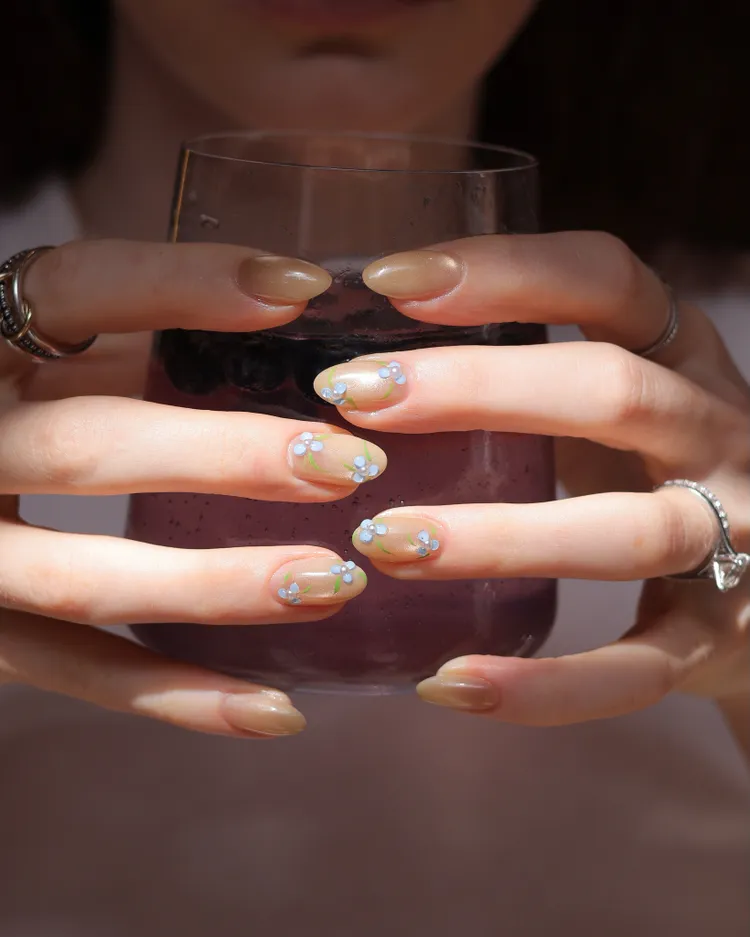
Equal parts playful and polished, this fruit manicure pairs a shimmering champagne base with hand-painted blueberries and delicate pearl accents for a design that’s sweet, subtle, and perfect for late summer.
02of 05
Stripe It Up
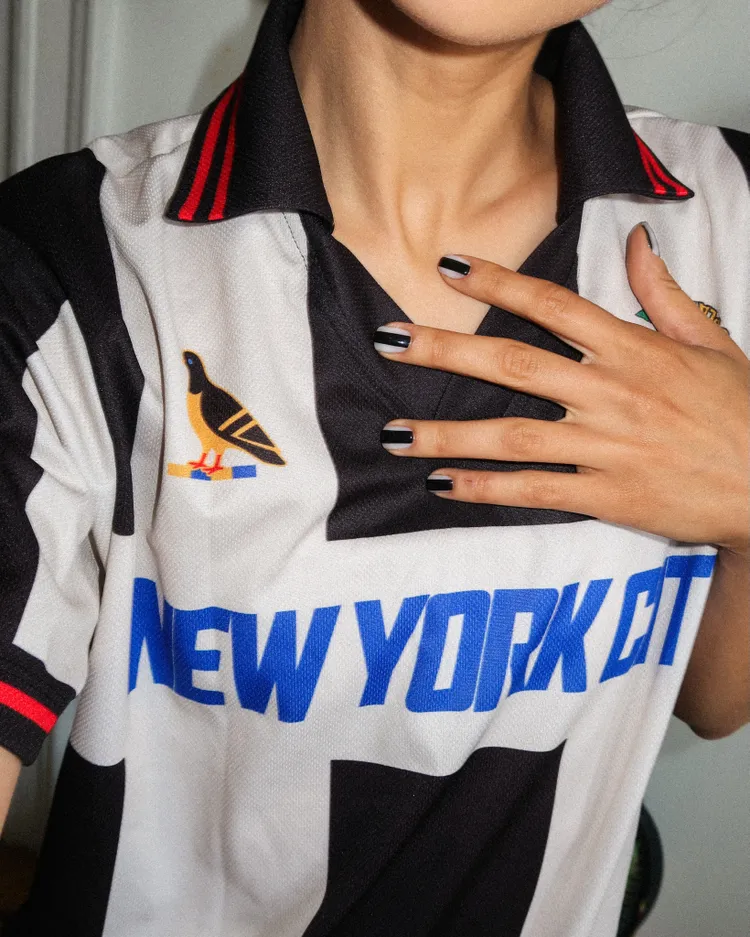
Meesh shares that she uses Japanese gel for any bold color nail art. And one of her signature go-to designs? Putting a stripe on it.
03of 05
Sardine Girl Summer
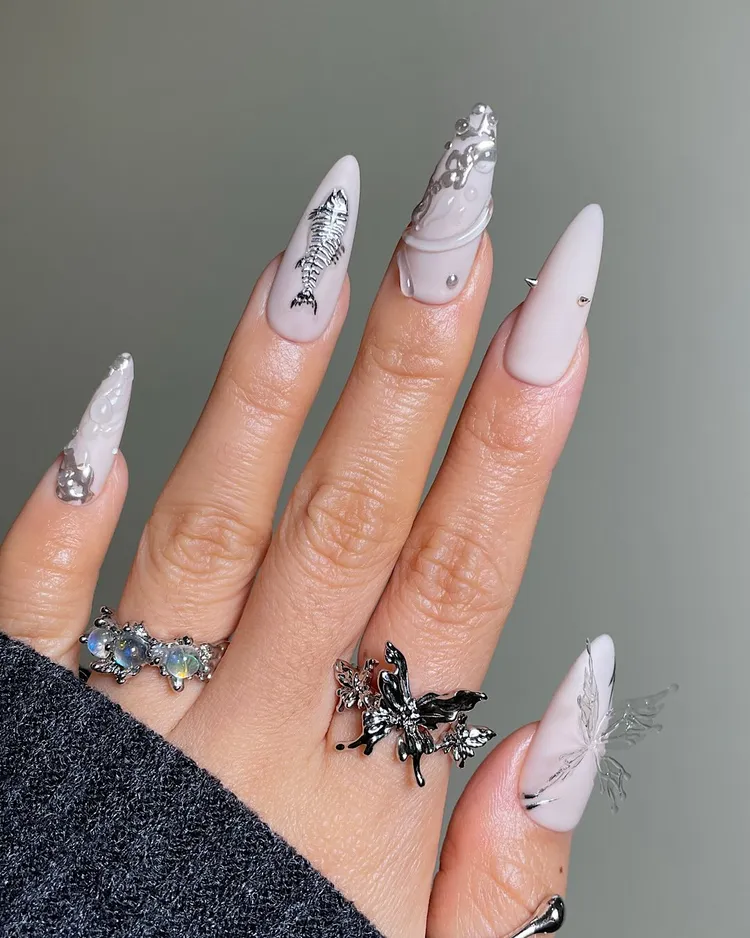
If Euro summer had a signature manicure, this would be it. A crisp solid-colored base sets the stage for metallic chrome sardines, while clear 3D butterflies and sculptural accents add an elevated, whimsical finish.
04of 05
Butter By the Beach
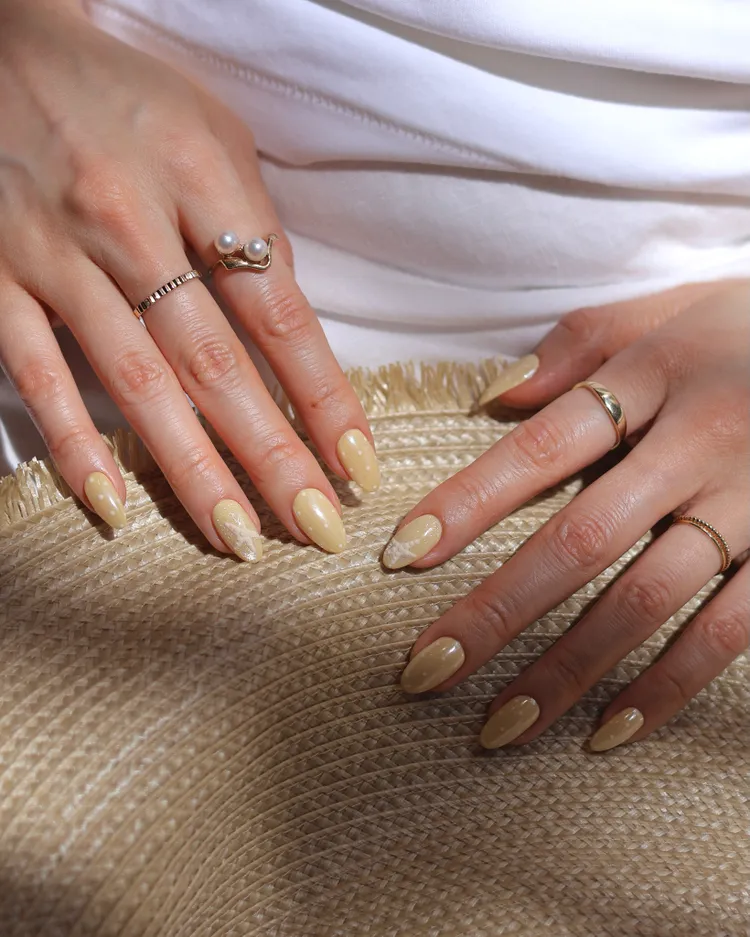
Butter yellow gets a coastal twist with delicate white starfish motifs and playful polka dots. The result is a fresh, beach-ready manicure that’s subtle enough for everyday wear.
05of 05
Maraschino Red
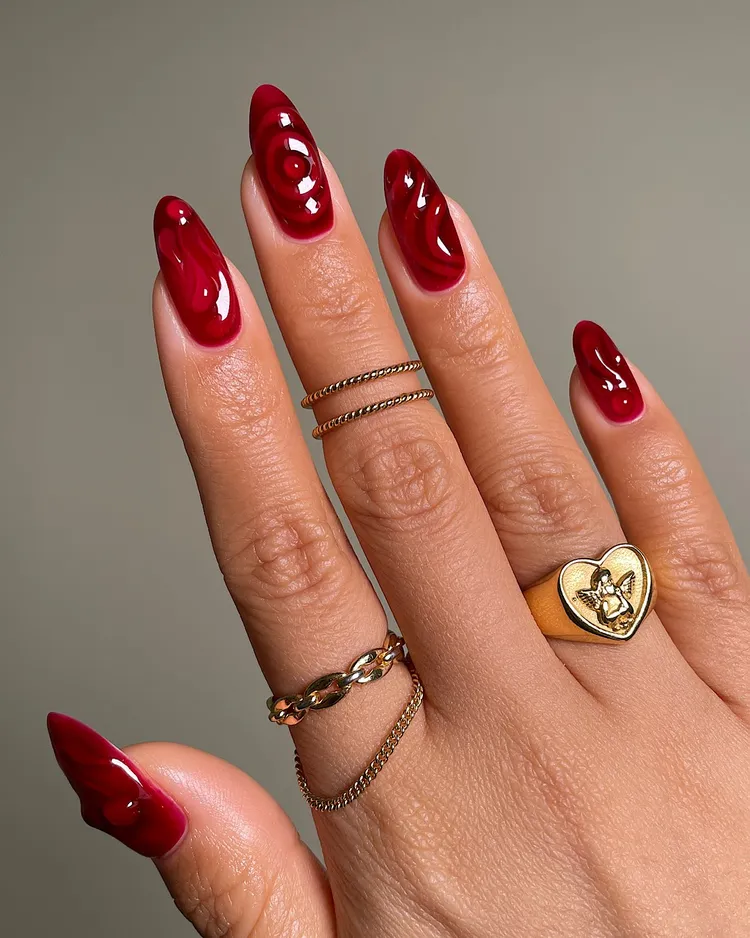
If you’re loyal to a classic red manicure, consider this its trend-forward upgrade. A rich-cherry base is elevated with tonal 3D details—including a sculptural cherry—for a look that’s timeless with just the right amount of dimension.